Cavity Treatment from Early Decay to Root Canal in Dongdaemun Seoul
Sensitivity, a dark spot or pain when eating sweets? We find how far the decay has gone and treat it with the most tooth-preserving option, explained in English.
Send a photo or X-ray and our team usually replies within 24 hours.

Where can I get a cavity treated in English in Dongdaemun, Seoul?
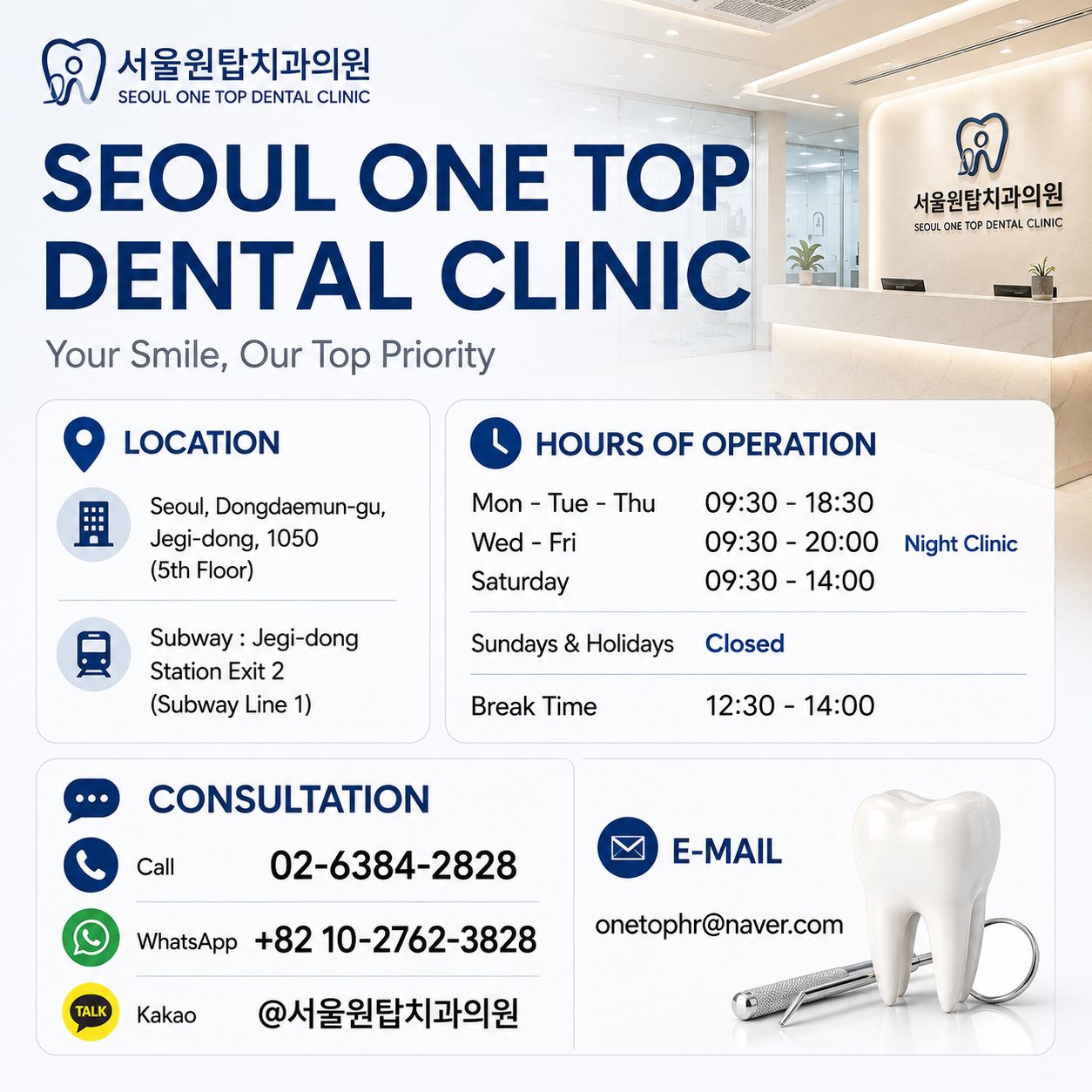
Dongdaemun SeoulOneTop Dental Clinic treats cavities on the 5th floor of 1050 Jegi-dong, Dongdaemun-gu, a 2-minute walk from Jegi-dong Station Exit 2 on Subway Line 1. Treatment depends on the size and depth of decay, from preventive care for early enamel changes to fillings, crowns or root canal treatment.
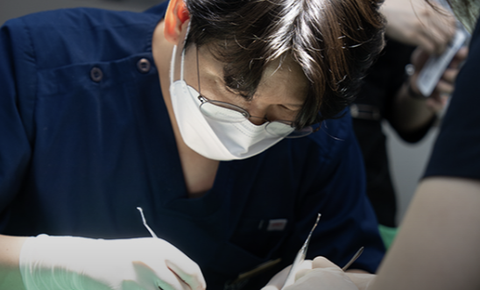
Your dentist examines the tooth, explains in English where the decay is and how far it has progressed, and recommends the option that preserves the most natural tooth.
Cavity treatment options
The deeper the decay, the more treatment is needed. Early care keeps treatment simpler.
Preventive Care for Early Decay
Measures for early enamel changes before a cavity forms.
Fluoride treatment →Dental Fillings
Restore a tooth when decay has formed a cavity.
Dental fillings →Tooth-Colored Fillings
Natural-looking restoration of a decayed tooth.
Tooth colored fillings →Treatment for Extensive Decay
Inlays, onlays or crowns when a filling is not enough.
Inlays & onlays →Root Canal Treatment
When decay reaches the pulp and causes inflammation or infection.
Root canal →Types of decay we treat
- Early enamel changes
- Small cavities
- Moderate tooth decay
- Cavities between teeth
- Cavities on chewing surfaces
- Cavities near the gumline
Signs you may have a cavity
- Tooth sensitivity
- Toothache or discomfort
- Visible dark spots or holes in a tooth
- Food frequently becoming trapped in a tooth
- Pain when eating sweet, hot, or cold foods
- A cavity identified during a dental examination
How cavity treatment works
-
Initial Consultation & Dental Examination
Your dentist examines your teeth and reviews symptoms such as sensitivity, discomfort, or tooth pain.
-
Cavity Assessment
The dentist determines the location and extent of tooth decay and evaluates whether the affected tooth can be restored.
-
Personalized Treatment Planning
Based on the condition of the tooth, your dentist recommends the most appropriate treatment.
-
Cavity Treatment
The affected tooth is treated according to the selected approach.
-
Bite & Restoration Check
After restorative treatment, the dentist checks the restoration and bite to ensure the treated tooth functions comfortably.
-
Follow-Up & Prevention
Regular dental examinations and professional cleaning can help monitor the treated tooth and reduce the risk of developing additional cavities.
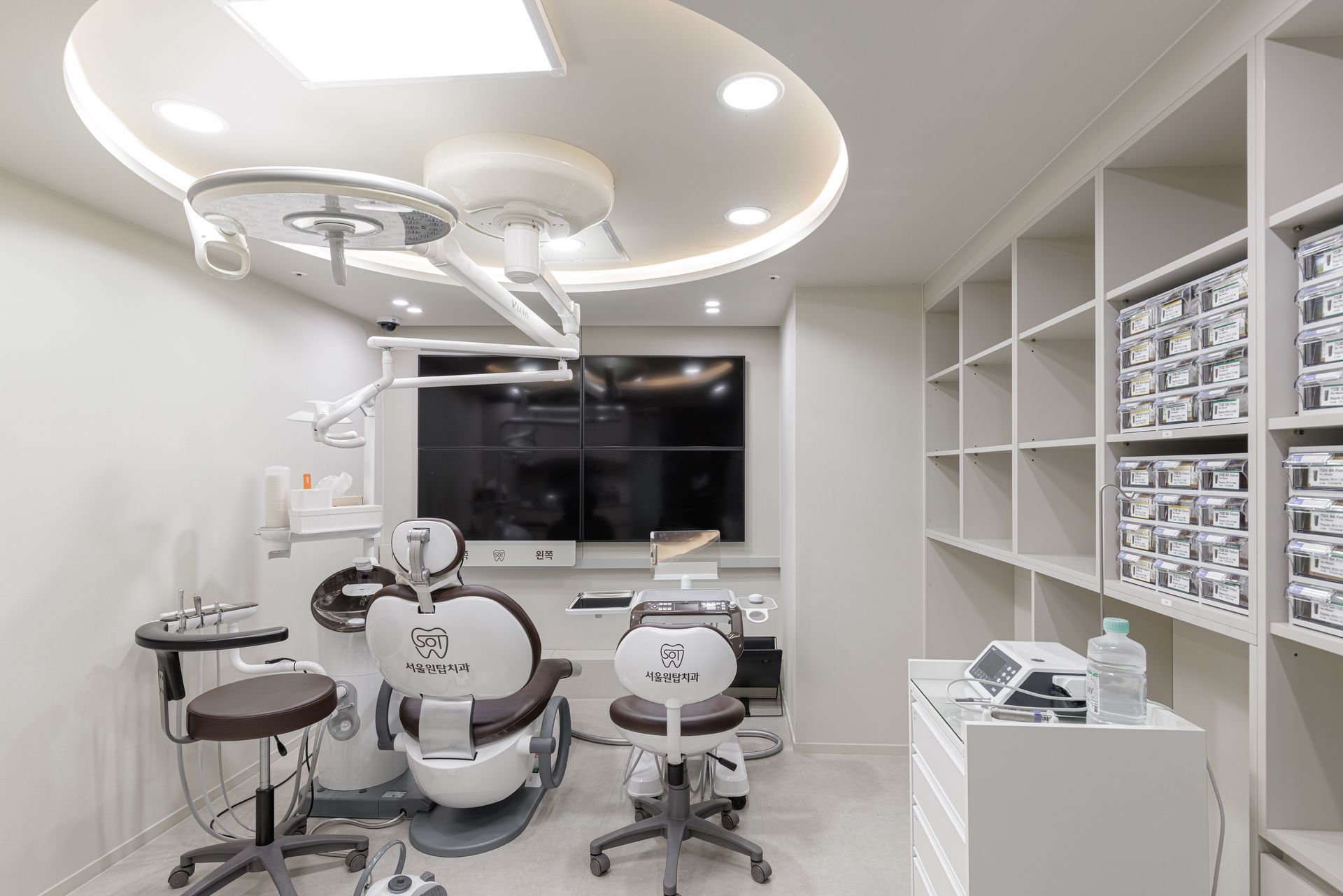
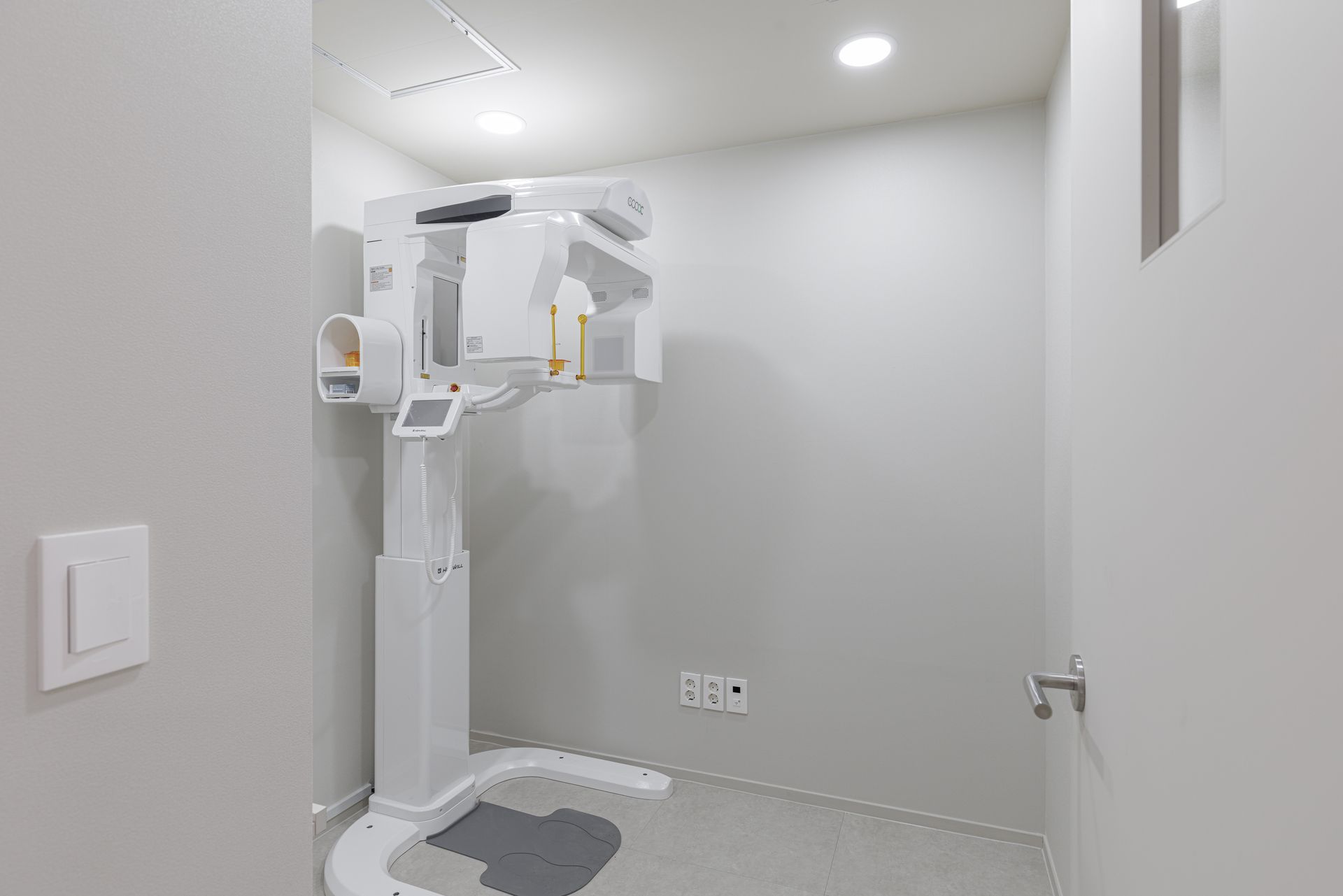
Comfortable, modern everyday dental care
- X
Digital X-rays and 3D CT Accurate diagnosis for cavities, wisdom teeth and infections.
- NHIS
Korean health insurance National Health Insurance (NHIS) accepted for covered treatments.
- ZZ
Sleep sedation available For dental anxiety, wisdom teeth and longer procedures.
- PM
Evening hours Open until 8 PM on Wednesdays and Fridays, and Saturday mornings.
Care led by board-certified dentists
Each treatment is handled by the dentist certified in it, and the whole team reviews patient records together every morning.


Cavity Treatment for foreigners in Seoul
Expats & students
Korean National Health Insurance (NHIS) accepted, with evening appointments until 8 PM on Wednesdays and Fridays.
Travelers
Toothache or broken filling on your trip? Message us on WhatsApp for the earliest appointment.
Dental anxiety
Sleep sedation is available, and every step is explained in English before we start.
How do I know if I have a cavity?
Common signs are sensitivity, toothache, dark spots or holes, food getting trapped and pain with sweet, hot or cold food. Some cavities have no symptoms and are found at check-ups.
Will I need a filling or a crown?
It depends on how much tooth is affected. Small to moderate cavities often need a filling, while extensive decay may need an inlay, onlay or crown.
Can decay come back under an old filling?
Yes, recurrent decay can develop around existing fillings. Your dentist checks and replaces them when needed.
How can I prevent new cavities?
Regular check-ups, professional cleaning and good daily care help. Read about dental sealants.
Do the dentists speak English?
Yes. Consultations and treatment explanations are given in English, with support in Chinese, Vietnamese, Russian and Mongolian.
Where is the clinic and when is it open?
5F, 1050 Jegi-dong, Dongdaemun-gu, Seoul, a 2-minute walk from Jegi-dong Station Exit 2 on Subway Line 1. Open Mon, Tue and Thu 9:30 AM–6:30 PM, Wed and Fri until 8:00 PM, and Saturday until 2:00 PM.
Toothache or sensitivity? Ask in English
Describe your symptoms or send a photo. We'll reply with what may be needed and when we can see you.