Dental Bone Grafting Before Implants in Dongdaemun Seoul
Not enough jawbone for an implant? Bone grafting rebuilds thin or lost bone so an implant has a stable foundation. Every case is checked on a 3D CT scan and explained in English.
Send a photo or X-ray and our team usually replies within 24 hours.

Where can I get dental bone grafting in English in Dongdaemun, Seoul?
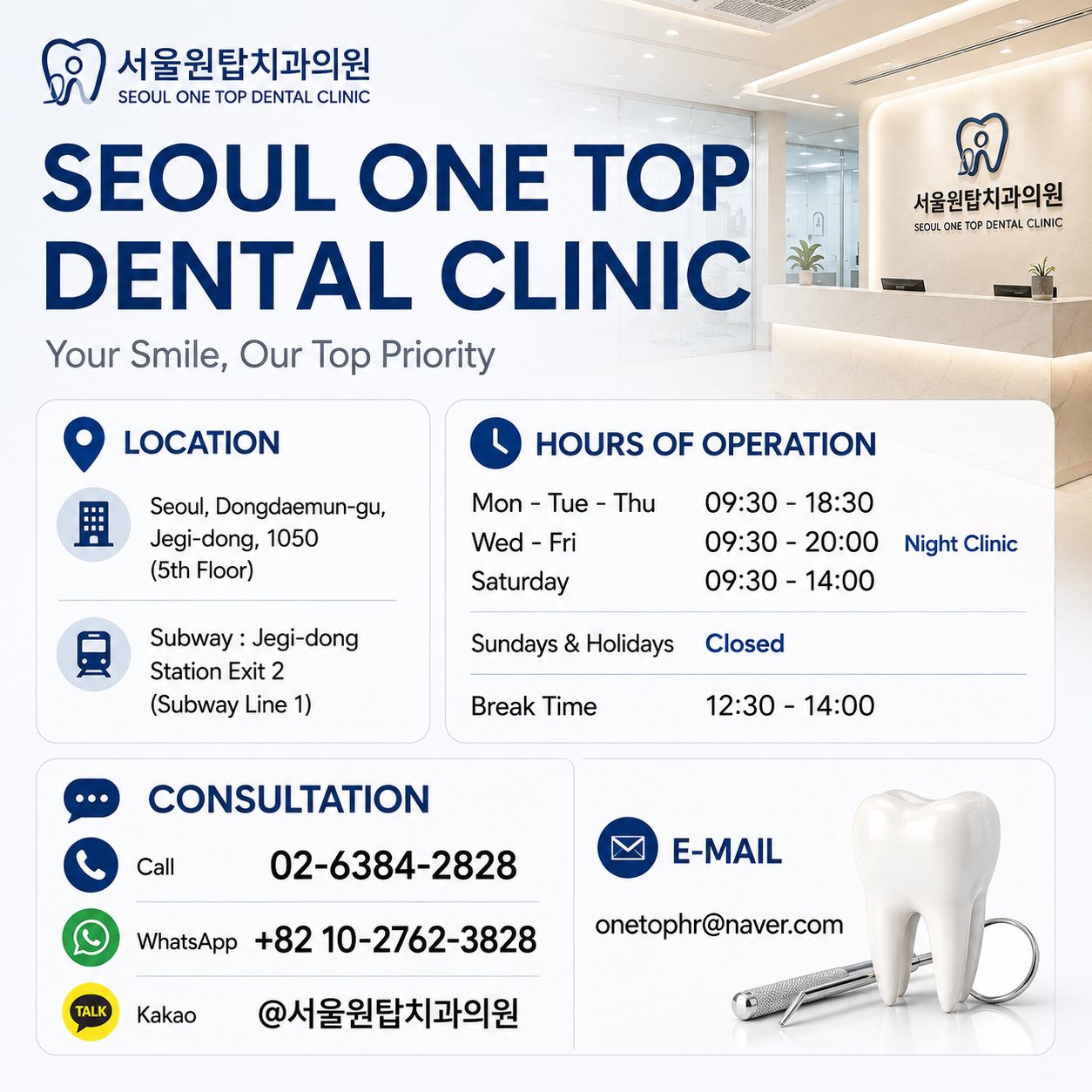
Dongdaemun SeoulOneTop Dental Clinic provides dental bone grafting on the 5th floor of 1050 Jegi-dong, Dongdaemun-gu, a 2-minute walk from Jegi-dong Station Exit 2 on Subway Line 1. Grafting is used when jawbone is too thin for planned implant treatment, after tooth loss, or where gum disease has caused bone loss.
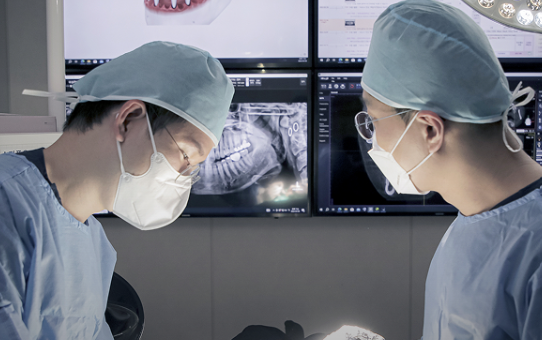
Your dentist assesses bone volume with dental imaging, then explains in English whether grafting is needed, which technique fits, and how it connects to your implant plan. Options include socket preservation, guided bone regeneration and localized grafting.
Bone grafting approaches
The technique depends on where bone is missing and what treatment comes next. Your dentist confirms it after imaging.
Socket Preservation
When a tooth is extracted, bone volume in the extraction area can change during healing.
Guided Bone Regeneration
Guided bone regeneration can be used in selected areas where additional bone support is needed.
Localized Bone Grafting
For a specific area with insufficient bone volume, a localized grafting procedure may be considered to provide additional support for future dental restoration or implant placement.
Bone Grafting for Dental Implants
When the available bone is insufficient for planned implant placement, bone grafting may be incorporated into the overall implant treatment plan.
Bone grafting can help with
- Insufficient jawbone volume
- Bone loss following tooth extraction
- Bone loss associated with missing teeth
- Bone loss related to periodontal disease
- Areas requiring additional support for dental implant placement
- Localized bone deficiencies around an implant treatment site
You may be a good candidate if you
- Have insufficient jawbone volume for planned implant treatment
- Have experienced bone loss following tooth loss
- Have bone loss associated with periodontal disease
- Need additional bone support in a specific treatment area
- Are considering dental implants but have limited available bone
How bone grafting works
-
Initial Consultation & Dental Examination
Your dentist evaluates your teeth, gums, jawbone, and overall oral health.
-
Diagnostic Imaging & Bone Assessment
Dental imaging is used when necessary to assess bone volume, the location of important anatomical structures, and the condition of the planned treatment area.
-
Personalized Treatment Planning
The dentist determines whether bone grafting is necessary and discusses the recommended grafting approach, treatment sequence, and relationship to any planned implant treatment.
-
Bone Grafting Procedure
The selected grafting technique is performed according to your individualized treatment plan.
-
Healing Period
The grafted area requires time to heal and develop adequate bone support.
-
Follow-Up & Implant Planning
Follow-up examinations allow the dentist to monitor healing and determine when the area is ready for the next stage of treatment, such as dental implant placement, when applicable.
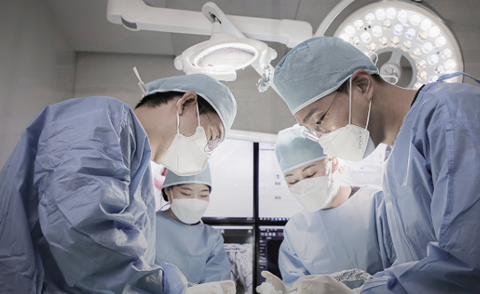
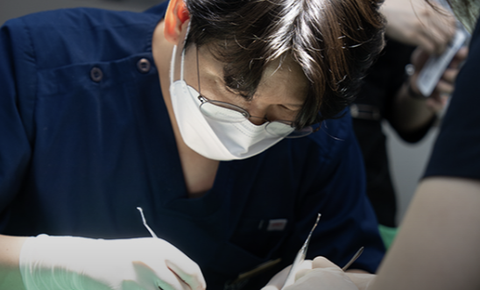
Digitally guided implant care
- 3D
CT-based planning Implant position is planned in 3D before surgery, for single teeth and full arches.
- OS
Established implant systems Brands such as Osstem, Straumann and DIO, chosen for your bone and budget.
- LAB
In-house dental lab Implant crowns, bridges and dentures are made on the same floor as the clinic.
- ZZ
Monitored sleep sedation For dental anxiety or long surgery, with a private 1:1 recovery room.
Care led by board-certified dentists
Each treatment is handled by the dentist certified in it, and the whole team reviews patient records together every morning.


Bone Grafting for foreigners in Seoul
Dental travelers
Send a recent X-ray or CT before you fly. We reply with options, an estimate and how many visits to plan around your trip.
Expats & students
Consultations in English, with evening appointments until 8 PM on Wednesdays and Fridays.
Dental anxiety
Monitored sleep sedation is available, and every step is explained before we begin.
Why would I need a bone graft before an implant?
An implant needs enough healthy bone around it to stay stable. If bone has been lost after an extraction, from missing teeth or from gum disease, grafting can add volume so the implant can be placed in a suitable position.
Can bone grafting be done at the same time as the implant?
Sometimes. Depending on your bone, grafting may be done before implant placement or included in the same implant treatment plan. Your dentist decides after checking the scans.
How long does the grafted area need to heal?
The grafted area needs time to heal and develop adequate support before the next stage. Healing time differs from patient to patient, and follow-up visits show when the area is ready.
What is socket preservation?
It is a graft placed after a tooth is extracted, to help maintain the shape of the extraction site in selected cases, which can make a later implant easier to plan.
Do the dentists speak English?
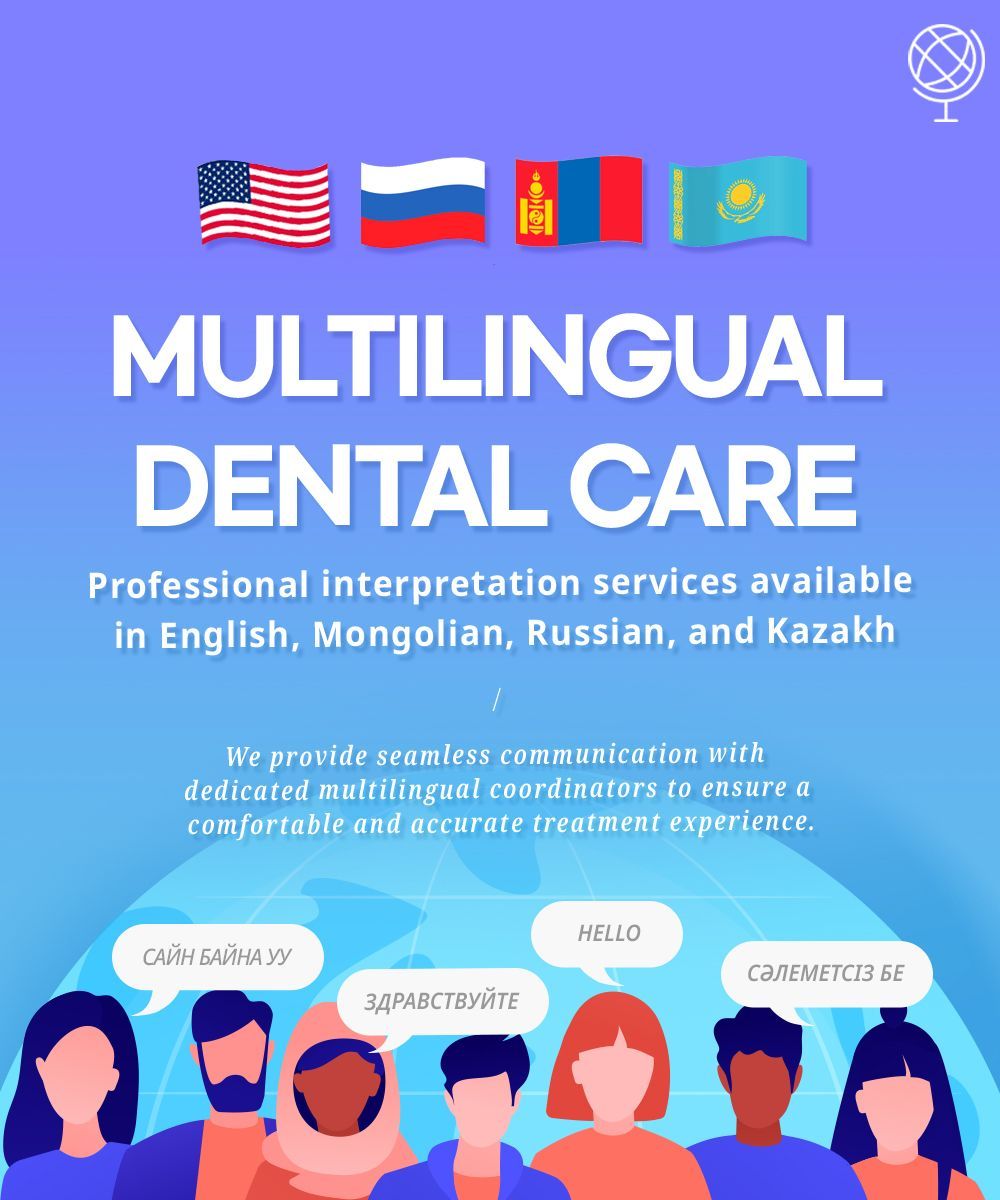
Yes. Consultations and treatment explanations are given in English, with support in Chinese, Vietnamese, Russian and Mongolian.
Where is the clinic and when is it open?
5F, 1050 Jegi-dong, Dongdaemun-gu, Seoul, a 2-minute walk from Jegi-dong Station Exit 2 on Subway Line 1. Open Mon, Tue and Thu 9:30 AM–6:30 PM, Wed and Fri until 8:00 PM, and Saturday until 2:00 PM.
Find out if you need a bone graft
Send a recent X-ray or CT scan. We'll tell you whether grafting is likely, what your implant plan could look like and how many visits to expect.